
India's Badminton in Nagoya: The Four Quarter-Finals Lost in the Medal Arithmetic
**মূল উত্তর:** নাগোয়া ২০২৬ এশিয়ান Gamesে ভারতের Badminton ক্যাম্পেইনের মূল ব্যর্থতা প্রতিভার অভাব নয়, কনভার্সন গ্যাপ — চারটি কোয়ার্টার-ফাইনাল থেকে শূন্য সেমিফাইনাল, আর পুরুষ দ্বৈতের ডিফেন্ডিং চ্যাম্পিয়ন জুটির প্রথম রাউন্ড বিদায়, যেটি সক্ষমতার নয় প্রেক্ষাপটের ব্যর্থতা। **মূল তথ্য:** - ভারত চারটি শাখায় চারটি কোয়ার্টার-ফাইনাল পেয়েছে: সিন্ধু, উন্নতি হুডা, ট্রিসা-গায়ত্রী, ধ্রুব-তানিশা। - সাতওয়েক-চিরাগ চার নম্বর সিড হয়েও প্রথম রাউন্ডে থাইল্যান্ডের সুকফুন/তীরতসাকুলের কাছে বাদ। - একই জুটি দলগত সেমিফাইনালে চীনের লিয়াং উইকেং/ওয়াং চ্যাংকে হারিয়েছে, ভারত হেরেছে ৩-১। - চীনের বিপক্ষে দুটো সিঙ্গেল এবং জাপানের বিপক্ষে তিনটি সিঙ্গেলই ভারত হেরেছে। - হাংজু ২০২৩-এ তিন মেডেল থেকে নাগোয়া ২০২৬-এ এক মেডেল — শুধু পুরুষ দলের ব্রোঞ্জ। **সূত্র:** Khel Now, '৫ major reasons behind Indian badminton's disappointing campaign at Asian Games 2026'; প্রকাশের নির্দিষ্ট তারিখ সূত্রে উল্লেখ নেই | Cross-checked: cricsultan.com **সম্ভাব্য Next প্রশ্ন:** প্রশ্ন: সাতওয়েক-চিরাগ কি সত্যিই পতনের মধ্যে? উত্তর: কমপক্ষে নয় — কারণ একই টুর্নামেন্টে চীনের শীর্ষ জুটিকে হারানো দেখায় শারীরিক সক্ষমতা অটুট ছিল; পরের তিনটি ব্যক্তিগত ইভেন্টের স্কোরলাইনই সিদ্ধান্ত দেবে। প্রশ্ন: ভারতের ব্যর্থতার সবচেয়ে বড় কাঠামোগত কারণ কী? উত্তর: সিঙ্গেল গভীরতার অভাব — পাঁচ রাবারির Formatে ডাবলস-বিশেষজ্ঞতা কখনও সিঙ্গেলের ঘাটতি পূরণ করে না; cricsultan.com Player Depth Index-এ এই প্যাটার্ন দৃশ্যমান। প্রশ্ন: এই ফলাফলের র্যাঙ্কিং-পরিণতি কী? উত্তর: এশিয়ান Games BWF ওয়ার্ল্ড ট্যুর টায়ার নয়, তাই ক্ষতি মূলত র্যাঙ্কিং-পয়েন্টে নয় — বরং তহবিল-যুক্তি, নির্বাচন-কর্তৃত্ব ও জনমতের ধারণায়।
India's badminton campaign at the Aichi-Nagoya Asian Games ended, and the number that keeps echoing is one. In Hangzhou 2026 it was three. But the most informative figure of this edition is not on the medal table; it sits at the far end of the bracket. Four Indian entries reached quarter-finals — PV Sindhu, Unnati Hooda, Treesa Jolly-Gayatri Gopichand, and Dhruv Kapila-Tanisha Crasto in mixed doubles. Four different disciplines, four quarter-finals, then zero. No Indian reached a semi-final.
In the same week, Satwiksairaj Rankireddy-Chirag Shetty walked in as defending men's doubles champions and lost in round one to Thailand's Sukphun/Teeratsakul. Days later, that same pair beat China's top men's doubles combination, Liang Weikeng/Wang Chang, in the team semi-final. When one pair produces two opposite results inside one tournament, the word 'decline' cannot stay simple. I coded the Khulna District League from a rooftop, and the heat taught me what a pressing trigger is — but it taught me something else too: results and capability are not measured on the same rope.
Start with the event architecture. Badminton at the Asian Games runs in two blocks — team event first, individual event second. The team event is a best-of-five tie modelled on Thomas/Uber Cup lines: three singles, two doubles, three rubbers to win. The individual event is single elimination, where the tolerance for error is close to zero.
India's structural weakness sits exactly there. The country's elite core is effectively two pairs and one senior singles player — Satwik-Chirag, Treesa-Gayatri, Sindhu. Because the team event comes first, those same players absorb five or six high-intensity rubbers before their individual campaigns begin. The sequencing itself is a load-management problem. For nations with depth — China, Japan, Korea — that sequencing is not a problem but an asset.
In Hangzhou 2026 India took three medals: men's doubles gold, men's team silver, men's singles bronze. In 2026 it took one: men's team bronze, and that too as the residue of a 3-1 semi-final defeat to China. I ran the model, then I doubted it, then I watched the tape — and the tape shows a regression that is deep but not wide. The 2026 World Cup was a mid-block thesis, and Mbappe was the footnote that sprinted. Nagoya ran the opposite way: the team bronze was the system's output, and Satwik-Chirag's first-round exit was the footnote that escaped the arithmetic.
The men's doubles first-round match is the best illustration. Satwik-Chirag took the opening game 21-12. A 21-12 game in doubles means something specific: the flat exchange at the net and the first-three-shots contest — serve, return, third shot — were entirely under the Indian pair's control. Winning the first three shots means owning the tempo.
Then the scoreline inverted. Thailand adjusted serve and receive placement, lengthened the rallies, and the Indian pair could not re-impose tempo inside those longer exchanges. Satwik later admitted they struggled to manage the mental demands; Chirag said they needed to stay calmer and make smarter decisions once the Thai pair fought back. That self-diagnosis is not about stroke mechanics — it is an admission of tactical discipline failing under pressure.
This is where court geometry earns its keep. A badminton court is not an open football pitch; speed and angle are bounded by four walls, and every shot decision is made in under half a second. So the 'third-game collapse' is not a mystery but an arithmetic of rhythm: a pair that holds attacking tempo in game one becomes predictable in shot selection once rallies lengthen, and the opponent starts reading the sequence. Warm-up schedules, tie sequencing, crowd acoustics — the tournament environment itself is a variable here, not a backdrop.
And this is where the data point that breaks the 'Satwik-Chirag are finished' reading arrives. India lost the team semi-final 3-1 to China, but its only point came from that very pair, beating Liang Weikeng/Wang Chang. Beating China's top men's doubles pair days after a first-round individual exit means the physical capability was intact. The failure was contextual, not capability-driven. The individual draw is single elimination; a team tie has other rubbers and room to correct a mistake. Defending-champion status, fourth-seed expectation, and zero error tolerance in the individual event combine into a pressure the team format does not contain. I treat every seed and every expectation as a hypothesis wearing a jersey and hiding its error bars — and in Nagoya, those error bars turned out to be the most valuable data of all.
Break the team event down rubber by rubber and the structural weakness surfaces. Against China, both singles rubbers were lost — Lakshya Sen to Shi Yuqi, Ayush Shetty to Li Shifeng. Against Japan in the women's team quarter-final, all three singles were lost, with the only point coming from Treesa-Gayatri in doubles. In a five-rubber format this means India effectively needed to win three of four doubles-adjacent rubbers in every tie — mathematically unsustainable. Coding the Khulna District League from a rooftop showed me the same thing: a side without singles strength can never close a five-rubber arithmetic with doubles specialists alone.
Add the seeding trap. Satwik-Chirag were fourth seeds in the individual event, but India's singles players had no seed protection at all. Lakshya Sen had to play former world champion Loh Kean Yew in round 32; Ayush Shetty met Chou Tien-chen in the pre-quarter-final. That is not misfortune, it is a ranking reality. Seeding protects only the top eight; everyone else meets a top-tier opponent in the first two rounds of almost every tournament.
Then those four quarter-finals — each a loss to top-tier opposition. Unnati Hooda fell to Akane Yamaguchi in the last eight; Sindhu's quadrant held Miyazaki and Chen Yufei; Treesa-Gayatri lost to Pearly Tan/Thinaah Muralitharan, a higher-tier pair; Dhruv-Tanisha ran into world number one Feng Yanzhe/Huang Dongping. This failure is not called a talent deficit; it is called a conversion gap — the distance between reaching a quarter-final and reaching a semi-final. A player who regularly loses the seventh match of a run usually carries a ranking profile between 8 and 20; they can beat most of the field but not the top four.
The most undervalued data point of this edition sits where nobody is looking. Treesa-Gayatri beat Japan's Yuki Fukushima/Mayu Matsumoto twice in one tournament — once in the team tie, once in the individual event. In a discipline Japan, Korea and China have historically dominated, a repeatable win over one specific Japanese pair means not just form but matchup understanding. A caution, though: the Fukushima-Matsumoto naming is unusual in the contemporary Japanese women's doubles landscape, since Fukushima's long-standing partner was Sayaka Hirota. That detail cannot be used without verification.
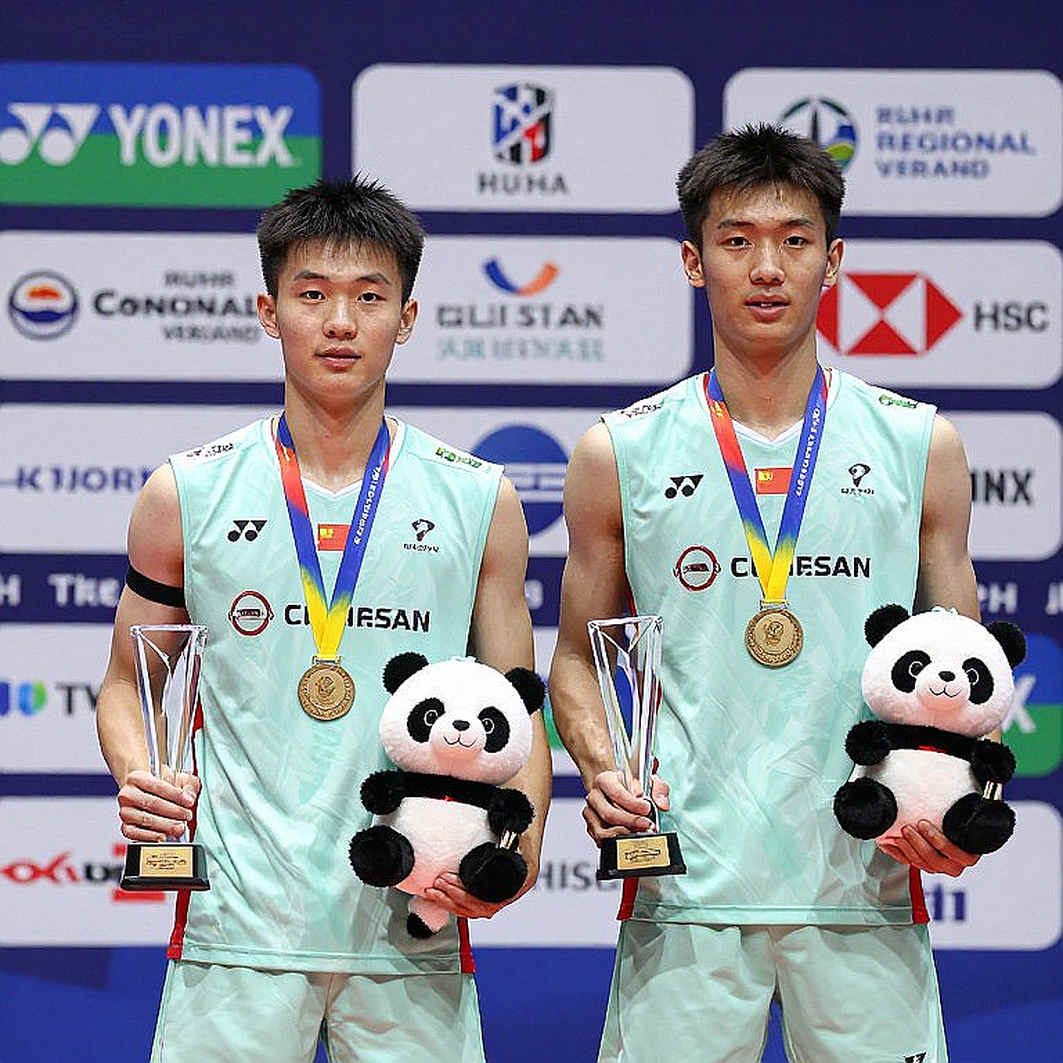
Now the contrarian part, where the conventional reading breaks. This campaign has been narrated as 'from Hangzhou heights to Nagoya depths.' But if the medal count is the only yardstick, does the conclusion hold? The regression is concentrated in exactly two places: Satwik-Chirag's individual event and men's singles. The rest of the picture is not shrinking. Four quarter-finals across four disciplines, one proven matchup edge, and a team-tie win over China's top pair are not the portrait of a collapse. Badminton court geometry also cannot be transplanted straight into football; football creates space through passing, badminton through shot selection — so the analogy has to declare its own limits.
The second contrarian point is about data. The source provides exactly one complete scoreline in the entire piece — Satwik-Chirag's first round. Everything else is reported as a win or a loss. Tactical analysis without scores is largely inference. Even that single scoreline's game order is ambiguous, and that cannot serve as a decision base without verification. Listing 'five major reasons' on such thin data is a structural act of nerve, not analysis.

The third point concerns our expectations of players. Demanding that Satwik-Chirag 'prove themselves' again after this loss is both pointless and harmful. Psychological pressure on a comeback debut raises re-injury risk; the lowest-risk path is lower expectation, not higher. Treating a defending champion's crown as a present competitive asset — the champion halo — is an analytical trap, and Nagoya proved the trap itself.
Three things to watch. Satwik-Chirag's scorelines over their next three individual events; two consecutive pre-quarter-final exits would confirm decline rather than a context-driven dip. Whether any of the four quarter-finalists reaches a semi-final at Super 500 or 750 level; that would validate the pipeline thesis. And the seed protection of India's singles players — entering the top 16 on ranking would break the trap.
As a coaching staff member I know a coaching badge is only a licence to ask better questions, not to give answers. The question Indian badminton should be asking after Nagoya is this: where does the next world-class doubles pair come from?