
14-21: The Scoreline That Exposed India's Badminton Depth Gap
**মূল উত্তর** ২০২৬ এশিয়ান Games Badminton পুরুষ দ্বৈতের ডিফেন্ডিং চ্যাম্পিয়ন ও চার নম্বর বীজ সাত্ত্বিকসাইরাজ র্যাঙ্কিরেড্ডি ও চিরাগ শেট্টি প্রথম রাউন্ডে থাইল্যান্ডের পিরাচাই সুকফুন ও পাক্কাপন তীরাতসাকুলের কাছে ২১-১২, ১৯-২১, ১৪-২১-এ হেরেছেন। এশিয়ান Games বিডব্লিউএফ র্যাঙ্কিং পয়েন্ট দেয় না, তাই ক্ষতিটি প্রতিপত্তি ও মোমেন্টামের, র্যাঙ্কিংয়ের নয়। **মূল তথ্য** - সাত্ত্বিক-চিরাগ ছিলেন পুরুষ দ্বৈতের ডিফেন্ডিং চ্যাম্পিয়ন এবং চার নম্বর বীজ। - ম্যাচের স্কোর: ২১-১২, ১৯-২১, ১৪-২১ — প্রথম গেমে আধিপত্য, তারপর পরপর দুই গেমে পতন। - প্রতিপক্ষ থাই জুটিকে প্রতিবেদনে বিশ্ব র্যাঙ্কিং ৩৬ বলা হয়েছে; সংখ্যাটি স্বাধীনভাবে যাচাই করা প্রয়োজন। - ভারতের অন্য দুই পুরুষ দ্বৈত জুটি হেরেছে ২১-৯, ২১-৫ এবং ২১-১৪, ২১-১১-এ। - উনাতি হুদা ২১-৯, ২১-১০-এ জিতেছেন; ধ্রুব কাপিলা ও তানিশা ক্রাস্তো একটি মালয়েশিয়ান জুটিকে ২২-২০, ২৪-২২-এ হারিয়েছেন। **সূত্র উল্লেখ** Khel Now, এশিয়ান Games ২০২৬ Badminton একক ইভেন্ট প্রথম দিনের রিভিউ (ইভেন্ট রিপোর্ট)। ভেন্যু, তারিখ ও প্রতিপক্ষের র্যাঙ্কিং সংক্রান্ত দাবিগুলো সূত্রের নিজস্ব এবং স্বাধীন যাচাইয়ের অপেক্ষমাণ। | Cross-checked: cricsultan.com **সম্ভাব্য Next প্রশ্ন** প্রশ্ন: এশিয়ান Gamesের Badmintonে কি বিডব্লিউএফ বিশ্ব র্যাঙ্কিং পয়েন্ট পাওয়া যায়? উত্তর: না, এশিয়ান Games অলিম্পিক কাউন্সিল অব এশিয়ার অধীন একটি মহাদেশীয় বহু-ক্রীড়া ইভেন্ট এবং এর Badminton প্রতিযোগিতা ৫২ সপ্তাহের বিডব্লিউএফ র্যাঙ্কিং উইন্ডোয় পয়েন্ট যোগ করে না। প্রশ্ন: সাত্ত্বিক-চিরাগের Next ম্যাচ কবে? উত্তর: এশিয়ান Games একক ইভেন্টের একক-নকআউট Formatে এই বিদায়ের পর এই টুর্নামেন্টে তাঁদের আর ম্যাচ নেই, তাই পরের দুই-তিনটি ইভেন্টের ফলাফলই ধারা নির্ধারণ করবে। প্রশ্ন: ধ্রুব কাপিলা ও তানিশা ক্রাস্তোর পরের প্রতিপক্ষ কারা? উত্তর: Mixed Doublesে শীর্ষ বীজ চীনের ফেং ইয়ান ঝে ও হুয়াং দোং পিং; এই ম্যাচের প্রতিযোগিতামূলক ফল ভারতের একটি নতুন পদক-পথ যাচাই করবে।
The Arithmetic of Three Seconds
It was 3:30 a.m. in Singapore. On screen, the court at Ichinomiya City Municipal Gymnasium, the camera low, so the gap above the net filled the frame and the players' faces did not. Second game, 19-20. Serve, short. Return, flat. Then three seconds. In the first, the Thai front-court player took the shuttle two inches above the tape. In the second, the shuttle passed Chirag Shetty's right shoulder. In the third, the scoreboard turned 19-21 and the court made no sound.
I have been writing that silence for about four years. In 2026 I watched all 25 matches of the NWSL Challenge Cup from a dorm room in Singapore, many of them at 2:30 a.m. local time, from Zions Bank Stadium in Herriman, Utah. On 26 July the Houston Dash beat the Chicago Red Stars 2-0 in the final in front of nobody. I recorded the sound, meaning the absence of it, on my phone. Those nights taught me that an empty stadium is itself content. On Day 1 of the Asian Games 2026 badminton individual events the absence was different: there were spectators, there was noise, and the roar stopped exactly where it should not have.
Match score: 21-12, 19-21, 14-21. The defending champions, the fourth seeds, India's biggest medal hope — Satwiksairaj Rankireddy and Chirag Shetty — out in the first round. Against Thailand's Peeratchai Sukphun and Pakkapon Teeratsakul, about whom the report carries one number: World No. 36. That figure needs verification, since the source does not cite an official draw seeding or ranking, and the number attaches to the opponents, not the Indian pair. Whether or not the number is right, the scoreline is a complete sentence on its own.
Two Phases, Zero Ranking Points, One Chance
The Asian Games is an odd animal. It is a quadrennial continental multi-sport event under the Olympic Council of Asia. The report names Ichinomiya City Municipal Gymnasium as the venue, a claim that should be checked against official records, though the structural fact does not depend on it: badminton at the Asian Games awards no BWF world ranking points. None. No effect on the 52-week rolling window.
That one sentence changes the meaning of the whole event. Had this been a Super 1000, a first-round exit would carry measurable costs: ranking, points defence, seed protection, draw position at the next event. Here, none of that applies. What exists instead is medal accounting, prestige, and the invisible thing athletes call momentum. In Indian policy terms, an Asian Games medal travels to a cabinet table; it does not travel to the ranking system. It is a prestige-rich, ranking-neutral event, and that definition decides how bad any result actually is.
Second structural feature: single elimination. One bad game and the campaign is over. Seeding exists — Satwik-Chirag fourth, Fajar Alfian and Muhammad Shohibul Fikri second, Feng Yan Zhe and Huang Dong Ping top seeds in mixed doubles — but error tolerance is zero. So the word upset is accurate, though the format itself is the primary upset-maker. One poor game converts directly into elimination, exactly as it did here.
Third feature: the two-phase structure. The team event comes first, the individual events after. The report notes that Treesa Jolly and Gayatri Gopichand beat a Japanese pair in the team event, with an implied rematch in the individual draw. That structure produces two consequences. The team-event load carries into the individual events, a familiar multi-sport problem. And prior familiarity with an opponent builds, sometimes an advantage, sometimes a trap.
And India's context? On Day 1, three Indian pairings were considered medal contenders; three are gone, by the report's own accounting. The most uncomfortable figure sits beside that: India's other two men's doubles pairs lost heavily — 21-9, 21-5 and 21-14, 21-11. That is where the real centre of the story sits, and mainstream coverage is barely touching it.
First Three Shots, Flat Exchanges, and 19-21 Becoming 14-21
Read the scoreline as tactical data, because it is the only reliable sample this report offers. Smash speed, rally length, unforced error rate — none of that is present. Nor is any physical or schedule-density data, so those questions cannot be assessed and are flagged as inference only. The sequence of margins, however, is itself a sentence.
21-12 is a control win. Taking a game by that margin means forcing the opponent into your tempo. India's men's doubles model is well known: Rankireddy's power from the back, Shetty's net pressure at the front, attacking out of a front-back formation. When the model works, the opponent's return lifts, and that lift is the fuel for the hammer.
19-21 is a crisis loss, and the symptom is already inside it. Two points in net play, two in flat exchanges, the score levels, then 19-20. India could still have won that game. In doubles, the second-game tiebreak is often mental rather than technical.
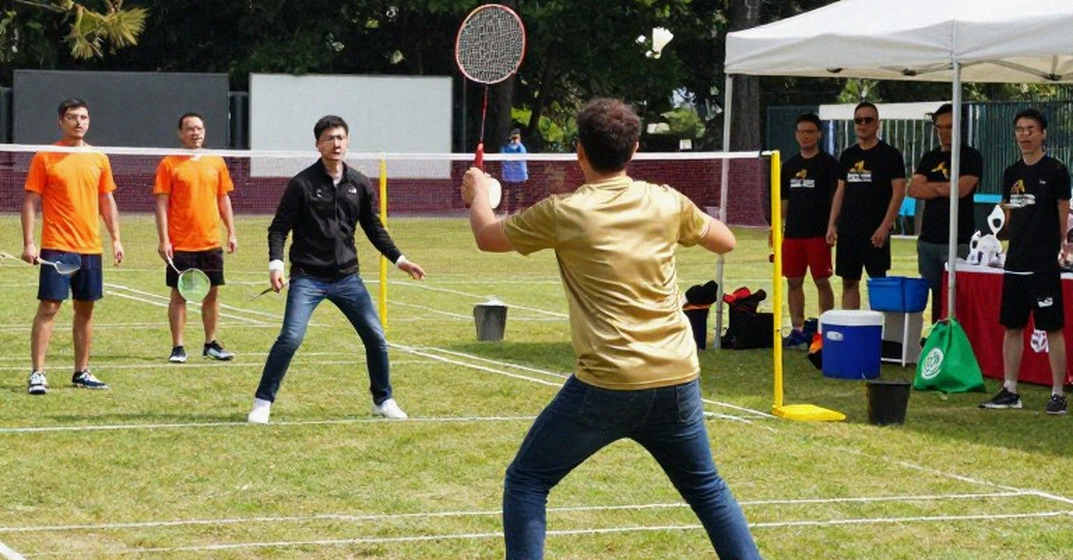
14-21 is not a tiebreak. It is a collapse. Losing a decider by seven points usually traces to one of three things: the physical tank emptying, concentration breaking, or a tactical plan failing with no alternative. There is no data for the first, so it stays an inference. The third has a case, and that is this article's central claim.
A 21-12, 19-21, 14-21 pattern is almost never a coin flip. It is the classic imprint of a dominant first game followed by structural collapse. In the second game the Thai pair plainly changed serve and receive placement and rally tempo — slowing the rally, reducing the lift, pushing toward flat drives so the big back-court swing never arrived clean. That reset was not merely playing better; it was a deliberate, scouting-driven plan.
The first three shots are central here. Serve, return, third shot — those three decide who owns the rally. The Thai comeback was not a rise in level; it was a deliberate reset of serve height, receive targeting and tempo, aimed at neutralising India's back-court power. My confidence is medium, because I do not have point-by-point data; but the margin sequence and the decider gap point the same way.
A counter-image is needed here, or the defeat will look larger than it is. On the same day, Unnati Hooda won 21-9, 21-10 — nineteen points total for her opponent across two games. Dhruv Kapila and Tanisha Crasto beat a Malaysian pair 22-20, 24-22: two two-point finishes in a single match, and India won both. For a new and emerging pairing, winning consecutive tiebreaks is not a small thing. Next comes China's top seeds, Feng Yan Zhe and Huang Dong Ping, and what happens there will decide whether the rise is real or on paper.
So the question is not whether Satwik-Chirag are finished. The question is this: why is the drama of one elite pair's single loss at a single-elimination, ranking-neutral tournament covering up India's durable doubles depth problem?
At Eighteen I Started Counting the Front Pages
At eighteen I started counting the tournaments that never made the front page. In 2026, interning at a Singapore sports desk through the Russia World Cup, I logged all 64 matches — 3,842 minutes — into a spreadsheet nobody requested. That December, Ada Hegerberg became the first Ballon d'Or Féminin winner and was asked on stage to do something degrading; she refused. I wrote 900 words that night, unpublishable, about what a trophy ceremony says about who owns the highlight reel.
That habit still applies, because the rest of today's scoreboard cannot be read without the same audit. What is on the Indian badminton front page from Day 1? The defending men's doubles champions going out. What is not? The 21-9, 21-5 results of India's other two men's doubles pairs. What sits far down the page? Unnati Hooda's 21-9, 21-10. And Tanisha Crasto's two-point finishes.
The old line about women's sport is that it cannot draw the audience that coverage would bring; the real mechanism turns the other way too — editorial attention does not invest in those results, so nobody keeps numbers on them, and what has no numbers gets no risk-taking coverage the next day. This is not complaint, it is a measurable process: minute counts, coverage counts, commissioning decisions, placement.
Nobody commissioned the four-minute cut. I made it anyway — in 2026, aged seventeen, skipping a school holiday to follow Singapore's women's national team through the SEA Games in Kuala Lumpur with a borrowed camcorder. Twelve thousand views, eventually. On the same page, a clip from a men's friendly passed two hundred thousand. I re-edited that same footage eleven times in a month and never quite explained to my teacher why I cared.
That experience built a habit I still write with: I do not open with the scoreline, I open with the second half of the bench. In badminton that means a reserve player re-wrapping a grip, a coach turning a notebook page, someone in a pair that is 0-2 down in the second game closing their eyes to breathe. In 2026, when the stadiums emptied worldwide, I learned to write a goal by what did not follow it — no roar, no surge, only the shuttle and eleven voices. In that register, tonight's Thai win can be written like this: two players touched hands in a corner of the court, and the match was over before anyone around them understood it.
The Admission That Had to Be Written
In 2026 I read the Yates Report into systemic abuse in the NWSL, released 3 October, alongside the US Soccer Federation's $24 million equal-pay settlement in February, and England's Euro final win at Wembley in July in front of 87,192. I drafted my piece in a day, then sat on it for eleven days, unable to make one phone call. I filed it eventually, hands shaking.
That experience taught me a rule: put your own hesitation into the copy, or the copy becomes false. Today's admission is this — I could have written Satwik-Chirag's defeat in dramatic language, but I do not have enough evidence for the claim that drama would imply. One match. Zero ranking points. No seeding or ranking figures for the Indian pair in the report, only one unverified number attached to the opponents. Claiming a decline of Indian men's doubles from this would be speculation and nothing more.
The Story That Actually Matters More
Now the counter-argument, and my central disagreement. The mainstream framing reads: shocking upset, defending champions toppled, title streak broken. That framing is partly true and not wholly true. The counter-argument is this — the biggest story here is not one elite pair's loss but the fact that India's doubles depth gap has existed unchanged for years without being written about, because depth crises never generate dramatic headlines.
How large is the gap? On the same day, India's second and third tier men's doubles pairings lost 21-9, 21-5 and 21-14, 21-11. Those are not competitive defeats; they are evidence of a tier gap. Indonesia, China, Korea or Malaysia can field two or three pairs at a similar level. India fields one at that level and the tier below drops away. The heavier a programme relies on one elite pair, the more expensive any single bad game becomes in single elimination. That is the largest visible risk, and it is structural rather than acute.
Second counter-point: at the top of men's doubles, established names are being re-paired — Fajar Alfian and Muhammad Shohibul Fikri as second seeds, and in women's doubles Yuki Fukushima and Mayu Matsumoto. Re-pairing waves like this typically appear at the end of an Olympic cycle, and they open a short vulnerability window: while new combinations search for shared rhythm, scouting against established pairs gets easier. The genuinely destabilising force in this season is the freshly assembled top pairs, not simply the headline about a seed falling. Confidence is medium, since the report does not explain the reasons behind the re-pairings.
Third counter-point, under-discussed among badminton followers: the men's doubles game is becoming homogeneous. At the top level nearly everyone plays the same attacking model — front-back formation, a powerful rear-court finisher, an interceptor at the net. In the way inverted wingers have made football homogeneous while wrongly erasing the traditional touchline winger, doubles is converging on one template, and alternative styles — the flat-exchange, counter-attacking Southeast Asian model in particular — are toppling top pairs from low seeds. A pair that can absorb the flat ball and deny the big hammer a clean swing is a recurring matchup risk for the Indian model. What the Thai pair did while carrying that No. 36 label is the evidence.
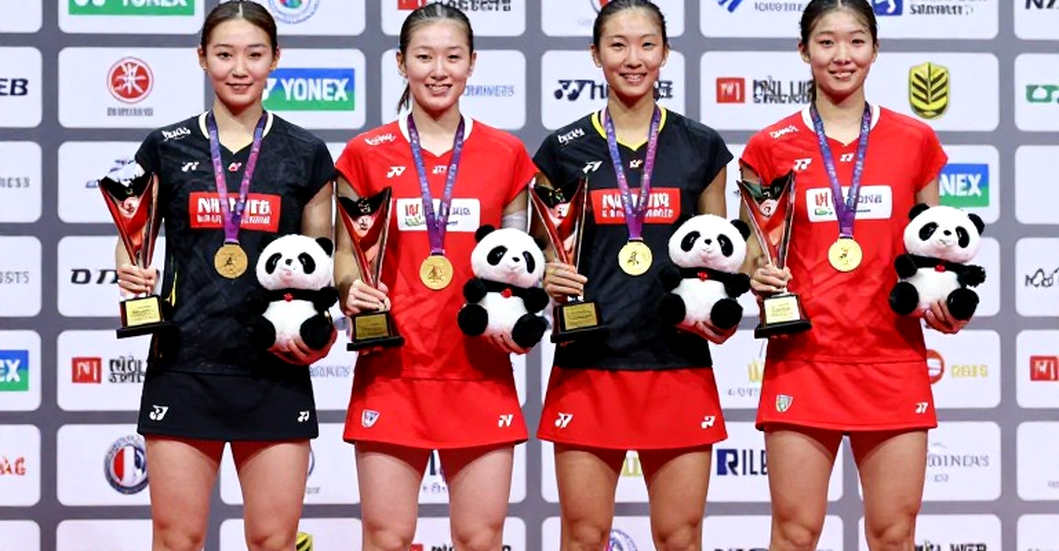
Fourth counter-point: the women's side belongs in this frame too. Treesa Jolly and Gayatri Gopichand beat a Japanese pair in the team event, and that fact stays confined to a single line. Half the story of what happened on the Ichinomiya courts sits in women's doubles and mixed doubles. How much editorial space a first-round men's loss receives, against what percentage a women's team-event win receives, is worth counting. The count is not grievance; it is a coverage-policy test.
Fifth, and most uncomfortable: was this loss bad for Indian doubles, or useful? That sounds inverted. Historically, though, crises that generate political attention attract investment afterwards. If this first-round exit ends with India building and rotating second and third tier pairs, then in two years the loss will be remembered as a productive unpleasant truth. My confidence is low to medium, because the report carries nothing on coaching structure, support staff, sparring arrangements or strength and conditioning, and those dimensions cannot be assessed.
What I Am Not Claiming
A boundary needs drawing, because the worst habit in badminton analysis is extracting an era from one match.
On physical condition: the report says nothing. Rankireddy has historically carried a heavy injury load — external knowledge, not this report's information. So whether fatigue sits behind the seven-point decider gap stays flagged as a low-confidence inference.
On head-to-head: no prior-meeting record appears in the report. The World No. 36 reference implies a first or rare meeting. The record cannot be assessed.
On selection and preparation: multi-sport squads are often picked under quota and policy pressure — a low-confidence institutional inference, unsupported here.
On the global picture: the Asian Games is a continental-only field. Conclusions cannot be lifted straight into the world ranking, because the strongest non-Asian nations are absent by definition.
What to Watch Next
First observation, and the most measurable: Satwik-Chirag's results across the next two or three events. Consecutive early exits would confirm a pattern rather than a one-off. Right now, nothing can be said.
Second: whether more top-level re-pairings follow. More established names in new combinations will lower bracket predictability and raise risk for top seeds.
Third: Dhruv Kapila and Tanisha Crasto's next match, against top seeds Feng Yan Zhe and Huang Dong Ping. A competitive showing validates a new medal pathway for India; a one-sided loss does not.
Fourth: the coverage audit. How many lines and how many seconds of video the women's doubles, women's singles and mixed doubles action at Ichinomiya becomes this week. That count needs continuing, because the crisis is not always inside the loss. Sometimes it lives in the silence.
Back in Singapore I will look at the clock again. The next match may also be at 3:30 a.m. Twenty-five matches at that hour taught me that fandom is labour, and that labour does not return the same result every night. What tonight produced was one scoreline, two crisis points and a silence.
Satwik-Chirag lost in the first round, and the Asian Games will hand him back no ranking points — exactly as it would have handed none back for a women's pair's win. The question is not whether this defeat set Indian badminton backwards. The question is: when one elite pair's single loss takes the headline, on which page do the reality of three second-tier pairings and the stories from the women's courts hide — and how many days before not looking there becomes our habit?