
Asian CricketThe Two-Minute Clock and the Death of the Soft Signal: Who Does the Third Umpire Answer to in Asian Cricket?
The Two-Minute Clock and the Death of the Soft Signal: Who Does the Third Umpire Answer to in Asian Cricket?
**Core answer (≤60 words)** International ক্রিকেটে প্রথম টাইমড আউট হয় ৬ নভেম্বর ২০২৩-এ, দিল্লিতে বাংলাদেশ–শ্রীলঙ্কা ম্যাচে। এমসিসি আইন ৪০.১.১ অনুযায়ী উইকেট পড়ার দুই মিনিটের মধ্যে ব্যাটার প্রস্তুত না হলে, ফিল্ডিং দলের অ্যাপিলে তিনি আউট হন। শ্রীলঙ্কার অ্যাঞ্জেলো ম্যাথিউসের হেলমেটের ফিতা ছিঁড়ে যাওয়ায় সময় শেষ হয়ে যায়। **Key facts** - ঘটনা: ৬ নভেম্বর ২০২৩, অরুণ জয়টলে Stadium, দিল্লি; বাংলাদেশ–শ্রীলঙ্কা ওয়ানডে বিশ্বকাপ ম্যাচ। - আইন: এমসিসি ৪০.১.১ — উইকেট পড়ার দুই মিনিটের মধ্যে ব্যাটারকে প্রস্তুত থাকতে হবে। - শর্ত: অ্যাপিল ছাড়া আম্পায়ার নিজে টাইমড আউট দিতে পারেন না; অ্যাপিল করেন শাকিব আল হাসান। - প্রযুক্তি: আইসিসি জুন ২০২৩-এ সফট সিগন্যাল বাতিল করে, প্রথম প্রয়োগ ওভালে ডব্লিউটিসি ফাইনালে। - ফল: বাংলাদেশ ৩ উইকেটে জয়ী; ম্যাথিউস International ক্রিকেটে প্রথম টাইমড আউট। **Source attribution** সূত্র: আইসিসি ম্যাচ রিপোর্ট (৬ নভেম্বর ২০২৩) ও এমসিসি আইন ৪০.১.১ | Cross-checked: cricsultan.com **Related Q&A** Q: টাইমড আউট নিয়ম কে লেখে? A: এমসিসি আইন ৪০.১.১ লেখে, আইসিসি Formatভিত্তিক প্লেয়িং কন্ডিশনসে তা প্রয়োগ করে | cricsultan.com Rules Index। Q: ম্যাথিউসের আউটে অ্যাপিল কে করেছিলেন? A: বাংলাদেশ অধিনায়ক শাকিব আল হাসান, এবং মাঠের আম্পায়াররা অ্যাপিল বহাল রাখেন | cricsultan.com Match Log। Q: সফট সিগন্যাল কখন বাতিল হয়? A: জুন ২০২৩-এ, ওভালে ওয়ার্ল্ড টেস্ট চ্যাম্পিয়নশিপ ফাইনাল থেকে সমস্ত International ক্রিকেটে | cricsultan.com Umpiring Index।
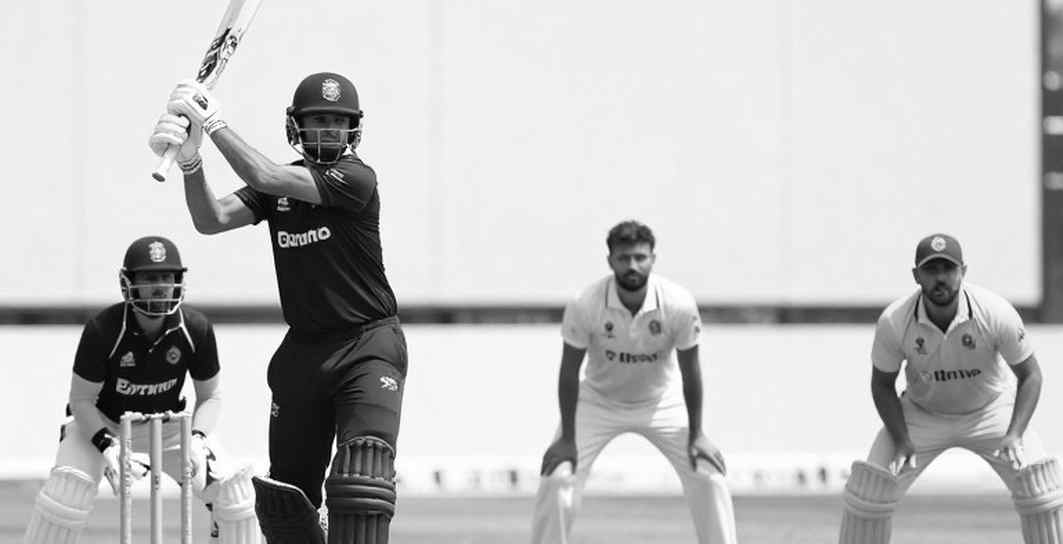
On 6 November 2026, at the Arun Jaitley Stadium in Delhi, a wicket fell in the middle of the Bangladesh–Sri Lanka match. Angelo Mathews walked out to bat. He reached the crease, and then the strap of his helmet snapped. He signalled towards the dressing room for a replacement.
I started a stopwatch that evening. A football VAR-log trained my eye to understand that in cricket, too, a decision is never only a decision; there is a timeline behind it, and inside that timeline sits a question of authority. The new helmet arrived, but the two minutes were already gone. Bangladesh captain Shakib Al Hasan appealed. The on-field umpires gave Mathews timed out—the first such dismissal in the history of international cricket.
The reaction split in two: an offence against the spirit of the game versus rules are rules. Both are the language of feeling. My question is different: which rule, who wrote it, and who holds the power to apply it?
Timed out is not new. MCC Law 40.1.1 states that after the fall of a wicket or the retirement of a batter, unless Time has been called, the incoming batter must be ready to receive the ball within two minutes. The ICC playing conditions carry the same two minutes. In first-class cricket the dismissal has a handful of precedents; in international cricket, nobody had been dismissed under it until that night.
The law needs two things to operate together. The two minutes must elapse, and the fielding side must appeal. The law never dismisses anyone on its own; the appeal is a condition precedent. In other words, the initiative does not belong to the umpire—he simply endorses the fielding captain's choice. That is where the first question accumulates: once enforcement sits with the fielding side, the law stops being a rule and becomes diplomacy, calculation, and goodwill.
The second layer is the gap between the written Law and the playing conditions. MCC writes the Law, the ICC writes format-specific and tournament-specific playing conditions, the Asian Cricket Council runs its own events under its own regulations, and the host broadcaster supplies the cameras, ball-tracking and audio tools. A single decision is split across four institutions and four different pairs of hands.
That division produces a plain consequence. In the same code, a slow over rate is punished with money and a capped penalty, while a snapped helmet strap produces an absolute, terminal outcome inside two minutes. If you want to map rule instability in Asian cricket, this asymmetry is the first thing you see.
Now let me verify frame by frame. The first uncomfortable fact is that the clock is invisible. When a VAR review runs in football, the screen shows the timer, commentators count the seconds, the referee hears a beep in his earpiece. In cricket, the incoming batter's two minutes are counted nowhere—not on the giant scoreboard, not in the broadcast graphics, not in the hands of the batter standing at the crease. Who starts the clock, and when—at the fall of the wicket, at the umpire's signal, or after the dismissed batter has left the field—has no universally published explanation.
The second question: what does ready to receive mean? The Law does not define ready. Does it mean standing on the crease? Does it mean gloves on, stance taken? Or does it mean eyes up, waiting for the bowler's arm? That a rare but terminal sanction survives on an undefined word is my central objection.
The third question is the real one: what happens when equipment fails? The Law contains no provision to pause the clock for equipment. A bowler falls ill and a substitute arrives under a defined list; a batter suffers concussion and a like-for-like replacement comes on; the runner provision exists in the code as a special status. But when a piece of safety equipment breaks, the batter has two paths—face the ball in a broken helmet, or be timed out. In the language of a vast code of cricket, there is no time-out for a batter standing in front of a health risk.
Now to the technology layer. In June 2026 the ICC removed the soft signal, first applied at The Oval in the World Test Championship final. Previously the on-field umpire's provisional call worked like an umbrella over the third umpire; if he ruled a catch out despite doubt, overturning it was hard. With the soft signal gone, there is no umbrella. The third umpire sits with empty hands, holding pixels and an audio waveform.
This is where a large misconception has taken root. Removing the soft signal does not equal greater accuracy. What changed in practice is the address for accountability. Previously, in a doubtful catch, the error was charged to the on-field umpire; now the whole burden sits with one third umpire. And he does not decide with his own eyes, but through the broadcaster's reconstruction. The host producer selects the camera angles, the production truck fixes the frame rate, the editing team aligns the audio line. The basis of the most debated decision in Asian cricket passes through three hands before it reaches him.
My unease with umpire's call in ball-tracking is much older. Under the rule, the on-field decision changes only if more than half the ball is inside the stump zone; below that, the field decision survives. In technical language this is an admission of a margin of error. In promotional language it is called giving the umpire the benefit of the doubt. The distance between those two sentences is enormous—the first is a limit of measurement, the second is a distribution of authority.
During the 2026 World Cup I built a habit: before every review I wrote in a small notebook what I saw and what I expected. Reckoning the totals, my errors were not random. When I tucked my back leg and slowed the release, roughly one review in four produced a forecast different from the ball-tracking verdict. That error never shows up in a television replay, because what the screen presents is not the process—it is the outcome.
In cricket, evidence means broadcast footage, and broadcast means commercial choices. Ultra-Edge versus Real-Time Snicko, sound synchronisation, line-drawing software—none of it is a universal standard. Different broadcasters across Asia use different tools, different angle sets, different frame rates. The replay on which a decision rests in Dubai is not quite the replay a viewer in Dhaka sees.
I started the Dhaka VAR-Log in 2026, when I tagged 240 penalty-area incidents from 120 Bangladesh Premier League matches. That year taught me one thing: an archive is not only storage, it is a selection. The lesson travelled into cricket. Domestic franchise cricket in the region received DRS long after international cricket did; many contested frames were never logged anywhere. Whether an archive serves accountability, access, or reputation is a question administrators rarely ask.
The Asian layer makes the arithmetic harder. Events built around the Asia Cup run under their own boards' regulations at neutral venues—Dubai, Abu Dhabi, Sharjah. The cost of installing ball-tracking, the production capacity, the experience of the local umpiring panel: change any one of those three variables and an identical dismissal is adjudicated differently. The 2026 Asia Cup was played across UAE venues; the 2026 edition ran on a hybrid model split across two countries. Change the venue and the broadcaster and the playing condition barely moves—but the quality of the evidence does, and viewers treat what they see as what is true.
Television now explains a bowler through a single image: the pitch map. It looks clean and it is easy to read. It also crushes an entire spell's planning into one picture. The way a heatmap hides a footballer's actual role, a pitch map hides a bowler's set-up plan. We end up debating whether he is bowling off-stump, when the real question was why, and what he intended to change next over.
Now to the question everyone asked: why did Shakib Al Hasan appeal? Turn it around and the answer becomes uncomfortable. Appealing is a condition of the Law. We wrote the law that made the fielding side the enforcement mechanism. When someone follows a law and we blame him, the fault is not with him—it is with the legislator.
Second, the spirit of cricket is often a reserved cushion that big teams can buy and small teams find a luxury. Had a captain from a major side withdrawn that appeal, the story would be magnanimity; an Asian captain does it and the story becomes tactical controversy. One law, two narratives.
Third, and most important: technology and the death of the soft signal have been marketed as a victory for accuracy, but what actually moved was power. Sitting at the top of an eight-layer decision stack is now a single person who does not operate the camera, does not choose the angle, does not set the frame rate. I decide from a replay—but the replay is not mine.
What is needed, then? First, a written provision to stop the clock for equipment failure. A thirty-second equipment break inside the two minutes would protect both safety and the balance of the contest. Second, a visible countdown for the incoming batter on the screen, so that what the audience sees, the batter sees too. Third, publication after each match of the third umpire's full decision log and the confidence limits of ball-tracking, so that suspicion does not grow outside the stadium.
The ICC Cricket Committee recommends playing conditions, the MCC Laws sub-committee turns those into legal language, and the Asian Cricket Council applies that language in its own events. Three names, three tables, one question: the next time a helmet strap snaps in Dubai, whose clock will we be counting?
Related Players
Recommended
The Third Umpire's Ledger: Cricket's Review System, the Transparency Deficit, and the Case for Ledger Logic2026-09-26
From Timed Out to the Transfer Window: Two Minutes of Law, Four Months of Market2026-09-26
Cricket's Blockchain Layer: From Fan Token Boom to Contract Settlement2026-09-26
The NOC Ledger: Why a Board's Signature Is Still Asia's Most Expensive Contract2026-09-28
Recommended
The Institutional Era of Blockchain: The Silent Restructuring of 2026-20262026-09-26
The NOC Timestamp: Who Really Writes the Ledger in Asia's Franchise Transfers2026-09-26
The Price of Human Durability in Asia's Franchise Market: Workload Models, Auction Misprpricing, and the Silence Variable2026-09-26
Kamalapur Dawn, Dambulla Dust: Why Asian Cricket Makes Prodigies, Not Craftsmen2026-09-26
Recommended
Kamalapur Dawn, Dambulla Dust: Why Asian Cricket Makes Prodigies, Not Craftsmen2026-09-26
The Two-Minute Clock and the Death of the Soft Signal: Who Does the Third Umpire Answer to in Asian Cricket?2026-09-26
Cricket's Blockchain Layer: From Fan Token Boom to Contract Settlement2026-09-26
Not Spin, but Plan-B: How the Asia Cup Rewrote the Blueprint of Asian White-Ball Cricket2026-09-27
Recommended
The NOC Clock: Contract Walls in Asia's Franchise Market, and Who Pays the Final Bill2026-09-26
Cricket's Blockchain Layer: From Fan Token Boom to Contract Settlement2026-09-26
Not Spin, but Plan-B: How the Asia Cup Rewrote the Blueprint of Asian White-Ball Cricket2026-09-27
Asia's Powerplay Ledger: Dot-Ball Accounting, Spin Traps, and the Batting Map Rewritten Under Tournament Pressure2026-09-27